Powder Brows Training
Structured training for precise shaping and a soft, controlled powder effect — from facial analysis and mapping to safe work on a model.
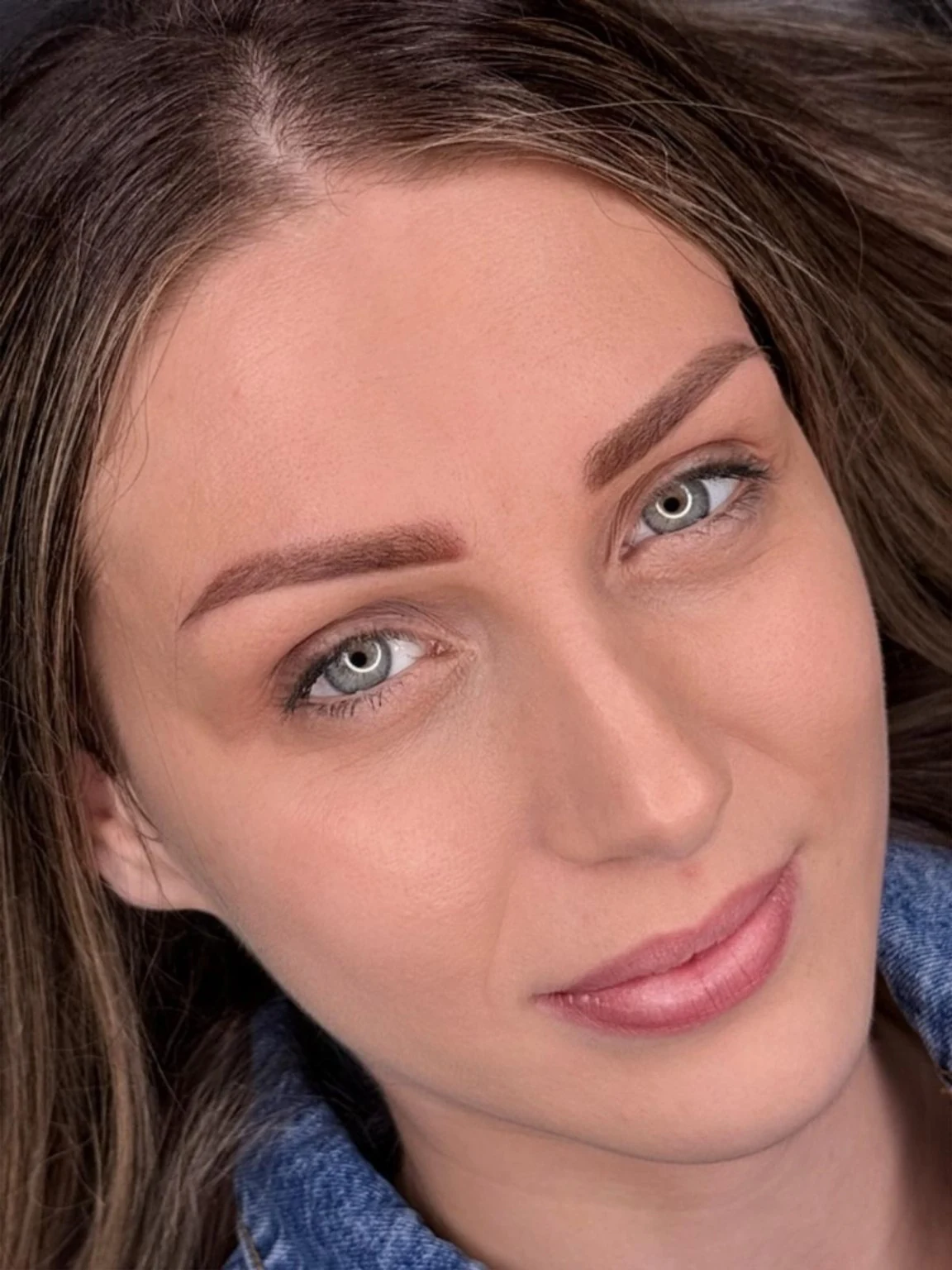
Training with a clear purpose.
It is designed for beginners who want strong foundations as well as PMU artists who want to improve shaping, saturation, transitions and consistency of results.
The programme is designed so that the student understands not only how to perform the technique, but also why a particular decision is made — from client assessment and design through execution, photography and aftercare. The duration and intensity are adapted to the training format and the student’s level.
From theory to controlled practical work.
The programme is divided into logical modules so every step has a clear purpose and can be applied in real client work.
Foundations & safety
Hygiene and workstation preparation • contraindications and client assessment • anatomy and basic skin behaviour • documentation and professional consultation.
Brow design
Facial and proportion analysis • mapping • symmetry without losing naturalness • shape selection according to facial morphology • predrawing and design approval.
Pigmentology
Colour theory basics • Fitzpatrick and skin undertone • pigment selection • predicting healed results • understanding corrections and unwanted tones.
Powder Brows technique
Body and hand positioning • depth and pressure • machine control • gradient from lighter to more intense • clean edges without a heavy block effect.
Educator demonstration
A complete treatment from consultation and mapping to final pigmentation, explaining decisions, work rhythm and skin control at every step.
Practical work on a model
Independent performance of key stages with direct supervision and corrections • result photography • aftercare and follow-up/healing plan.
Knowledge that remains practical.
- Safer and more precise brow shaping
- Understanding pigment, skin and healed results
- Controlled powder/ombre transition without an overly strong front
- Clear consultation, treatment and aftercare protocol
- Theory and practical work
- Technique demonstration
- Practical work on a model
- Working guidelines and protocols
- Educator feedback
- Certificate of completion
Individual approach. High professional standards.
Group size and training format are organised to allow enough time for demonstrations, questions, corrections and a genuine understanding of the technique.